
Looking Through a Dirty Window
What happens when the field becomes home

I’ve lived in these two old, slightly decaying houses for over three decades now. My wife and I are collectors of our past. Well, not really consciously collectors, we’ve just accumulated artifacts from a long life together, and we’re too disorganized and lazy to sort through the mess. But, as I get closer to closing out my 70s, I decided to start clearing out my share of all the junk crammed away in dusty, forgotten rooms.
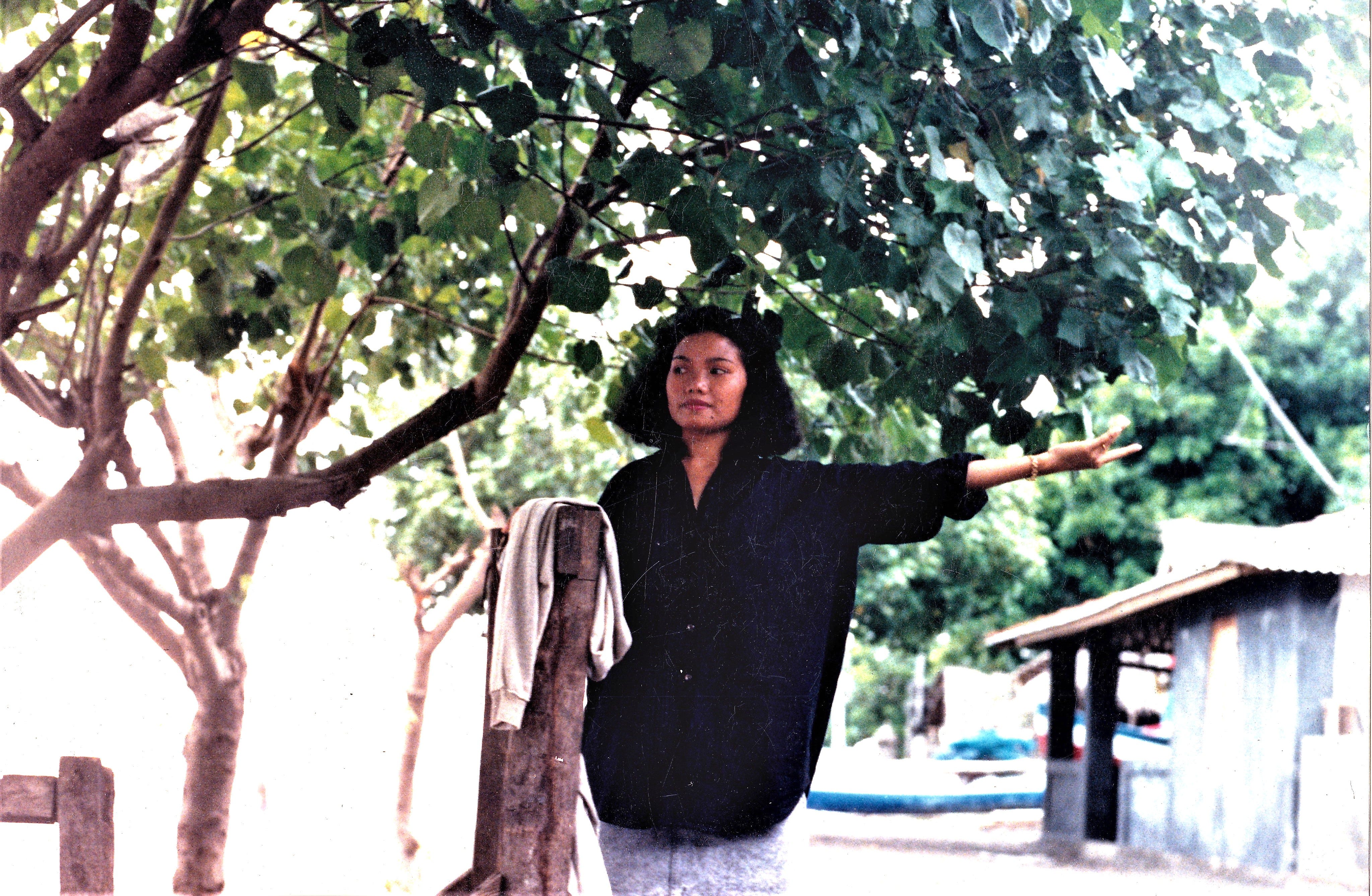
I came across several boxes, covered in thick layers of dust, crammed into a corner to the shelf above my clothes closet. Their appearance startled me. What’s in these boxes and when did I put them here? They were hidden away behind piles of empty shoe boxes that I collect for my granddaughter to use when she is bored and wants something to do. Descending carefully down the ladder while clutching the dirtiest of the boxes to my chest, I laid the box on the floor. There were no markings to identify the contents. Opening the box, piles of faded, bent black and white photographs spilled out on to the floor. A photo of me at 40, bare-chested on the beach. Another of me chopping chili peppers in the first house that I lived in in the north of Bali. My wife at 29 with long, frizzy hair standing in the rain on the beach in Anturan.
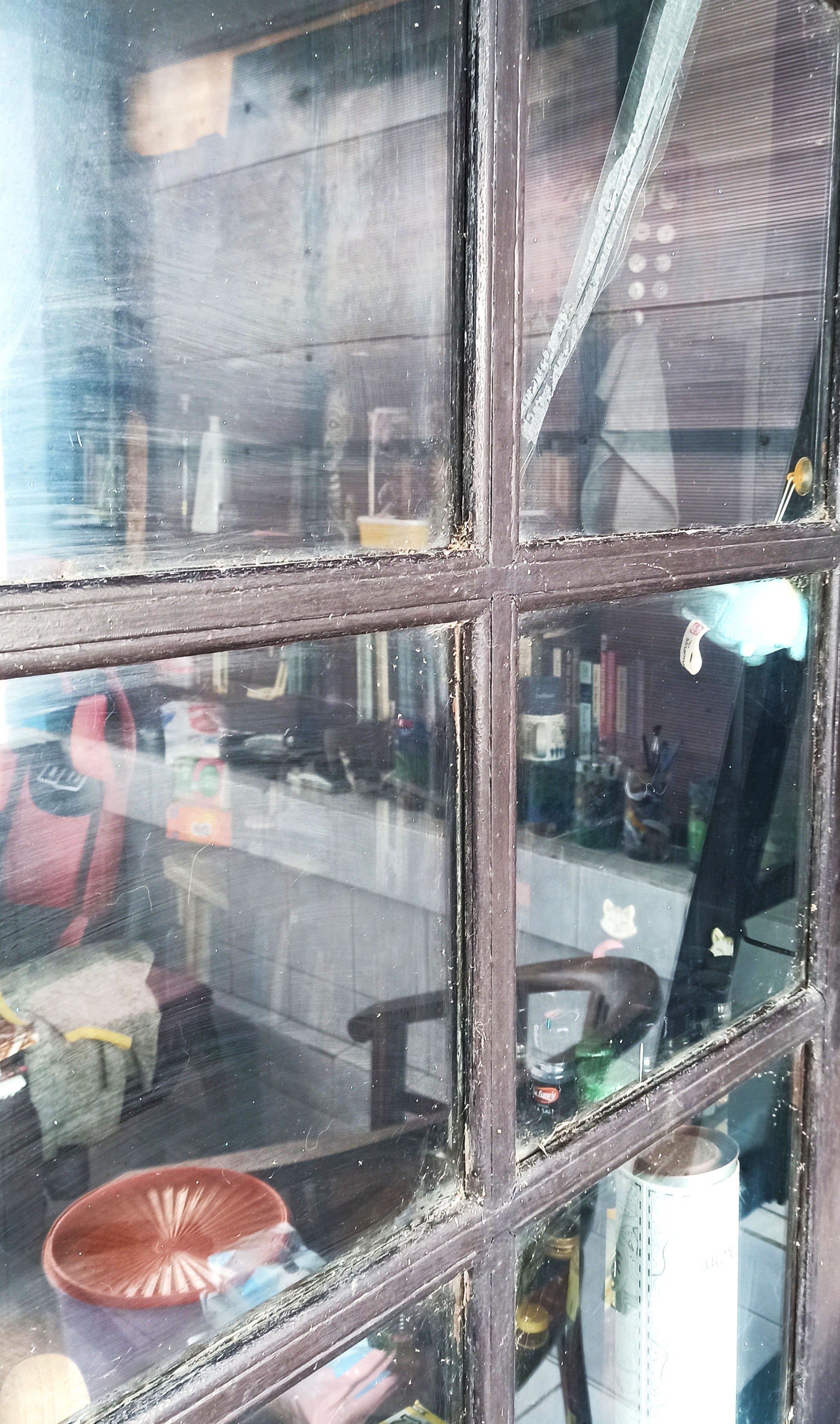
Then gently placing the photographs on the floor, I began pulling out weather-beaten notebooks. Opening them up brought a shock of remembrance. My handwriting in black and red ink. Notes on a Ngaben ceremony in Singaraja. Measurements of a family temple. Questions about whether my understanding of Balinese names fit with previous research. Sketches of designs on a local temple. My youthful attempts at discovering Balinese culture while peering through a dirty window.
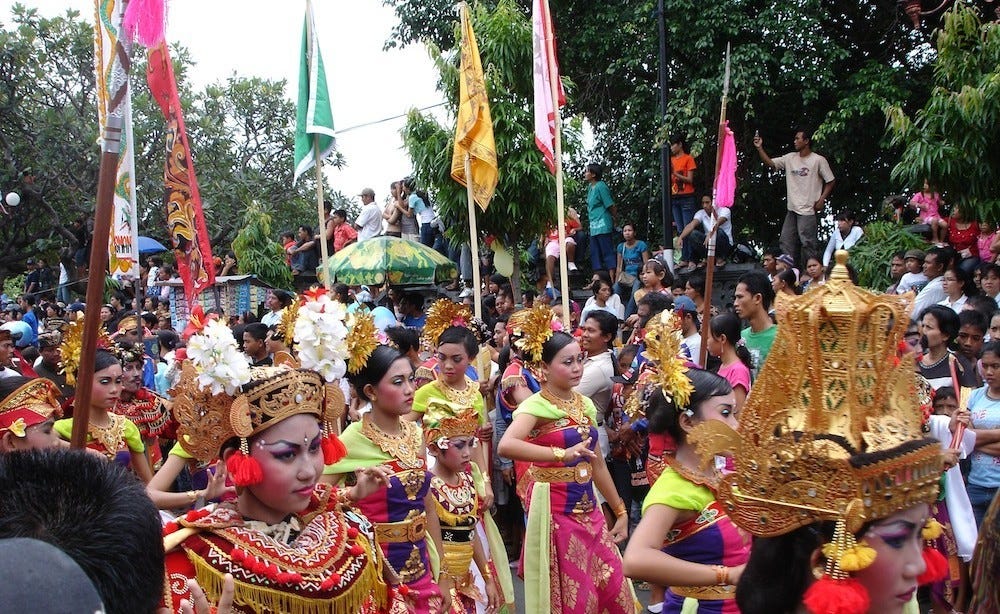
I was fascinated to the point of obsession with designs, dance routines, temple architecture, shadow puppet plays. All of the wondrously unique and exotic surface aspects of Balinese culture. As I became more familiar with the Indonesian language I began thinking about life histories and started chatting with elders.
There was a long transcription of a taped conversation with my Balinese buddy’s grandmother about her youth. I can still vividly see the two of us sitting in the house that I shared with her and her family, cross-legged on the floor, my tape recorder lying on the floor between us. She was topless as was usual with many old grandmothers, and at one point when I was asking her about what life was like in her youth, she placed her hand on my ankle and said, “When I was younger, these breasts were full, and you and I would have had some fun.” Shocked a bit at her earthy joke, I blushed I guess, because the rest of the family broke into hysterical laughter.
There were pages and pages of notes, some so brief that I had no idea what they meant, others long and meandering and written in a shaky hand obviously the outcome of a night of drinking beer and arak with the men of the village.
Almost two years after I first came to Bali as a visitor on vacation from my work in Western Papua, I married a local woman, had our first child and decided that I would make Bali my home. I continued to focus on the theater state and the myriad colorful ceremonies and rituals. I collected boxes full of photos as well as the occasional video of Bali during Galungan and Kuningan. A variety of Balinese masks hung on the walls of my house. My library of books on what I came to call Baliology filled my bookcases. Looking for more books to add to my Bali collection, I came across the ethnography, Managing Turbulent Hearts, by Unni Wikan.
Wikan’s ethnography differed from other studies of Bali. She argued that the model of the theater state, the abstraction of what we call culture was a mistaken approach to understanding life in Bali. Her work was written expressly against what she saw as a focus on the exotic in Bali. Wikan’s focus was on how Balinese actually lived. It was an anthropology of experience. In order to understand the meaning of life on the island it is necessary to observe actual people living their daily lives, as mundane and commonplace as that may be. As I read through Wikan’s arguments, I realized something that was happening to me. Slowly, over the years, my focus had been changing from looking at the exotic in Bali to what people were actually doing and feeling the rest of the time when they were not engaged in rituals and ceremonial activities. I was doing what Wikan did, doing the anthropology of experience.
Ten years ago an old friend from my international teaching days visited Bali. He came up north away from the tourist hordes, to visit and catch up on old times. I gave him the perfunctory tour around Singaraja. We wandered the city streets through Muslim neighborhoods, Hindu neighborhoods, Buddhist neighborhoods. Singaraja is an old city. Once it was filled with colonial period architecture. Over the years most of those buildings have been torn down and replaced with modern style buildings. But the city is still filled with temples and mosques and churches.
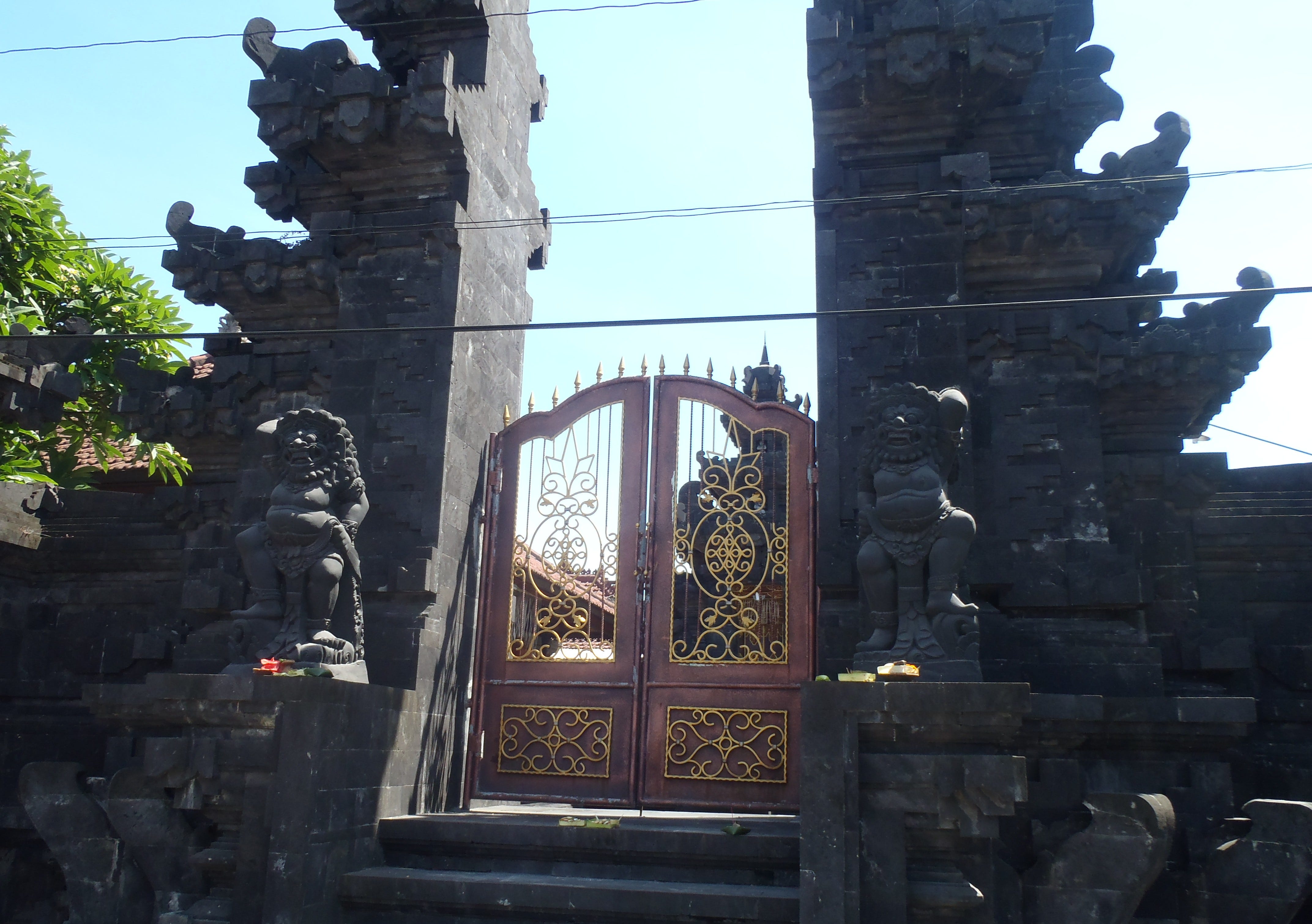
One beautiful, sunny day as a breeze from the ocean gently flowed through the city streets, we passed one of the famous Balinese split gates. He asked me what they were called and if they had some symbolic meaning. It was a good question that any new visitor to the island might ask. I have many photos of the Candi Bentar, including several of one of the most famous ones on the island, the Bali Handara gate up in Bedugal. My notebooks have long passages on the variety of gates found throughout Bali. Comments about their color, construction, height and, of course, symbolism. But, at that moment in time, I could not remember the name of the gate nor any more of the symbolism other than that they represent harmony and balance.
“That’s it?” he asked. I could tell by the tone of his voice that he was less than impressed with my vast knowledge of the local culture.
“Um, yeah, you find them all over the island,” I said somewhat flustered. Why couldn’t I remember something so obvious and basic in Balinese culture? But, when was the last time I paid any attention to split gates; like trees and other structures they’ve become part of the background.
Later that evening we sat around the house watching reruns of Seinfeld, drinking whiskey and telling stories about difficult parents of students we had to endure when we were teachers. George walks into Jerry’s house and lays down on the sofa. He has his shoes on, I blurt out instinctively, “Oh Jesus Christ.” My friend gives me a quizzical look and says, “What was that about?”
“He had his shoes on.” I have to explain about wearing shoes in the house, and especially when laying on furniture.
“That bothers you?”
37 years of taking off my shoes at the front door, at my dentist’s office, at friends’ houses. Yes, it bothers me. I don’t remember the gates, I do feel the shoes.
My eldest granddaughter, who just turned 13, sometimes shows up on my balcony after school. She looks in the door to my study without coming in and without saying anything. I can tell by the perplexed look on her face that she has something she wants to discuss. I get up from my desk, come out to the balcony and take my usual chair. She plops down in her chair, drops her school backpack on the floor and looking at me with those intense Zoey eyes, says, “I have a question. No, I have two questions.”
“First question,” I say hoping the questions aren’t the monumental ones where there’s no easy answer.
“Why does blood taste like metal?’ She holds up a bandaged finger for me to examine.
That’s an easy one, I think, knowing that the next one won’t be so easy. It’s her habit to ask easy questions first and hard ones after that. I give her a quick explanation about iron in the blood. She’s satisfied with the answer.
“Second question.”
This is the hard one. She looks serious, her face tightens up just a little bit. She leans forward in her chair. “Why don’t all people believe in God?” That’s the hard one.
“Wow, it’s complicated. There is no one answer to that question. Many people believe in a god, just not the god you believe in. Like Hindus believe in different gods than Muslims or Christians, for example. Some people don’t believe in any gods because they can’t see god or hear god. People that believe in a god or gods take it on faith that they exist.”
“That’s not a real answer.” She is clearly unhappy with my TikTok length response to what for her is a question of existential importance.
“It’s the best I can do right now. Maybe later I can come up with a better, more complete answer. Like I said it’s very complicated.”
She shifts in her chair, looks out at the sea, turns around gazing in through my study’s windows at bookcases filled with books on religion, and then turns giving me one of her exasperated teenage looks and says, “you’re an American scientist, why can’t you answer that question.”
About the anthropology of experience. It reminds me of what Malinowski called the imponderabilia of everyday life, the anthropology of the quotidian. When one lives in a place where there are striking artistic or ritual practices, I imagine one tends to focus on those. In Madagascar, Anthropologists have been drawn toward oratory and burial practices, the exotic rather than the economy and daily social life. Fortunately, I was able to resist that temptation since my focus was sociopolitical organization and regional variation. I spent a lot more attention to rice fields than to orations. Be careful on those attic stairs!