
Reading Faces, Missing Meaning
Paul Ekman’s universal emotions and what gets lost in translation

Sometimes doom-scrolling through the internet can actually bring some positive rewards. A short clip on Instagram about an encounter between two scientists and a TSA agent who was able to read a person’s behavior based on facial movements caught my attention recently, especially when Dr. Cal Lightman shows a photo of a Dani tribesman and claims that their facial responses are the same as the facial responses of an American undergraduate. During my nine years living in Papua, I had many Dani friends. Hmm, I was intrigued.
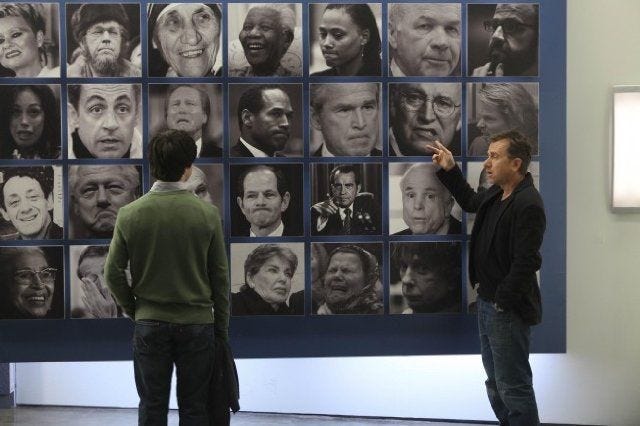
I discovered that the clip came from a TV series called Lie to Me, which concerns behavioral scientists solving crimes based on their ability to detect lies and other behaviors and emotions by reading facial and body movements. The show was based on the life and work of Paul Ekman, a psychologist who specialized on facial expressions, the development of a Facial Action Coding System and research into the universality of emotions. I’ve long been interested in the question of the universality of emotions, and so I dove into the series like a shark after chum. It’s been an interesting and welcomed break from my usual sci-fi binging late at night. But the best thing to come from this chance encounter on social media has been the resurgence of my interest in looking at emotions cross-culturally. Are facial expressions of emotion the same cross-culturally? Are there core universal emotions? Who is this Ekman character, and what did he do that deserved a television series based on his work?
Blood and Smiles
Back in early 1990, I was still finding my way around living in Indonesia. Even though I wasn’t there as a researcher, I took notes on everything that I did and saw. There was something about the cultures of Indonesia that fascinated me, and especially the culture of Bali where I was building my first house in Indonesia. Sitting in an overcrowded bemo on hot, muggy morning, trying to avoid the small child next to me who found that poking a white foreigner in the leg could be quite amusing even as his mother kept reprimanding him and pulling his hands away from my leg. Suddenly the sounds of metal on metal impact, the bemo quickly spun around, windows shattering. I was flung off my seat and onto the floor. Then a quick silence. Shock? I looked up, shaken, to see a row of passengers smiling at me. Why smiling? I felt something warm on my arm. Looking down there were two streams of blood snaking down my arm. Shards of glass were embedded in my arm. I looked up again, still smiles. Why smiles? Suddenly the driver opened the side door, saw my arm and was able to put together a sentence in English, “You want doctor?” The reality of the injury registered. The smiles disappeared. A woman cried, her baby screamed. An elderly man offered a ragged towel to wipe away the blood. We headed off the hospital. People carried on a conversation with me until we reached the hospital, when they smiled again and bade me good-bye. But why the initial smiles in a situation that called for a different response? Could Ekman’s research on the universality of emotions help clarify this confusing encounter?
Ekman’s Universal Emotions
Basically Ekman, an American psychologist, believed that all humans, regardless of culture, share a small set of basic emotions and that we express these emotions in the same facial way. So what are these basic emotions he’s talking about? Ekman started out with six: happiness, sadness, surprise, anger, fear and disgust. He later added contempt, but this one has proven to be somewhat problematic even in Ekman’s research. These emotions are biological and universal. And as Ekman has noted in many of his scientific articles, his work is in line with Darwin’s classic book, The Expression of the Emotions in Man and Animals, in 1872.
What are the key components of Ekman’s thesis?
First he argues that there are universal facial expressions for specific emotions. For example, a Dani highlander will show the same facial expressions as a white undergraduate student in the United States. Ekman and others have done research in various cultures, including preliterate cultures that support this argument. This supports, Ekman says, the idea that expressions are natural and not purely learned. But there is an important proviso here, which is that Ekman only posits six or seven core emotions as universal, and that often gets lost in both his arguments supporting his theory and the arguments of his detractors. For now let’s stick with the “core emotions” and I’ll get around the discussing other emotions in a future essay.

So, it has been argued that, in fact, people may show different facial expressions for the same emotion. Ekman’s work on what he called neurocultural theory addresses that issue. His neurocultural theory argues that there are two different sets of determinants of facial expressions. One is neurological and universal and the other cultural and variable between and within cultures. Display rules and elicitors (events that elicit emotions) are important parts of Ekman’s work that are sometimes overlooked by his critics, and this may help explain my early encounter with Balinese emotions. Ekman says that the elicitors of certain emotions often, but not always, vary from culture to culture. And secondly display rules may determine when and with whom certain emotional expressions may be displayed, as well as variations with the consequences of those emotional expressions. And, to get even more specific, he writes that there may be variations within subcultures as well. As an example, a Japanese friend of mine recently told me about being extremely angry when her manager publicly criticized her work. She reported that she kept a “calm, blank demeanor with a slight smile” during the incident because of Japanese cultural restrictions against showing anger to a superior. However, when she was recounting the incident to me her facial expression clearly showed a facial expression that Ekman would call universal for a display of anger. So let’s take a look at the Balinese example that I discussed above.

Display Rules and Cultural Meaning
I was confused by the smiling display on Balinese faces in response to me being thrown out of my seat in the bemo and ending up sprawled on the floor with blood running down my arm. First, smiling in the face of uneasiness, anxiety or confusion is not uncommon in the US for example. We may, for example, smile when a superior suddenly reprimands us with no warning as a defense mechanism. But, I would argue that in the Balinese case, all of the passengers smiled not because of an individual response but rather because of collective cultural conditioning. Smiling in the face of fear or shock is a cultural coping mechanism. Displaying intense emotions is culturally prescribed (although emotional transgressions happen frequently these days, but that is a topic for another essay.) This smiling is a way to invert intense negative emotions into something more manageable and socially appropriate.
When Indonesians laugh in the face of an accident or serious, awkward situation, it is generally not a sign of malice, cruelty, or lack of empathy. Instead, it is a deeply ingrained cultural and psychological coping mechanism used to manage stress, anxiety, and the unexpected. But you can find the same smile in other situations. Context and culture and meaning.

So in my Balinese case, Ekman would say that display rules prohibit the showing of the emotional expression for fear or shock. And according to his development of the idea of microexpressions, a trained observer would see the innate fear expression displayed for just a microsecond before the culturally approved response would kick in. Ekman calls this innate response a “leakage.” Once the initial shock, fear, surprise passed when it was clear that I was injured but not seriously and that the danger had passed, people’s emotional expressions returned to what would be “normal” in a public setting like sharing a bemo ride. So Ekman’s neurocultural theory would be able to account for the Balinese situation. I would argue that the more interesting and more important point to get from this encounter is not whether there is a universal emotion fear, which I actually accept, but rather the cultural rules and the context that brought about the smiles rather than looks of shock or fear that I would expect is such an accident occurred in the US. The question then is what is the meaning of the expression within the context of Balinese society. After we examine that, then we can look cross-culturally for similar situations.
The Anthropological Pushback
What about early anthropological critiques of Ekman’s claims for the universality of emotion? His work on the universality of emotions began in the 1950s, and it led him in his early days to encounters with two legendary anthropologists: Margaret Mead and Gregory Bateson. In one of Ekman’s many articles he recounts the early encounters and fondly remembered Bateson even though Bateson disagreed with what Ekman was researching. His remembrance of Mead, on the other hand, was not quite so fond. She dismissed his work and publicly attacked it in later years. In fact, many anthropologists have been critical of Ekman’s claims for the universality of emotion. However, others such as Karl Heider have cooperated with Ekman in research and support his claims.
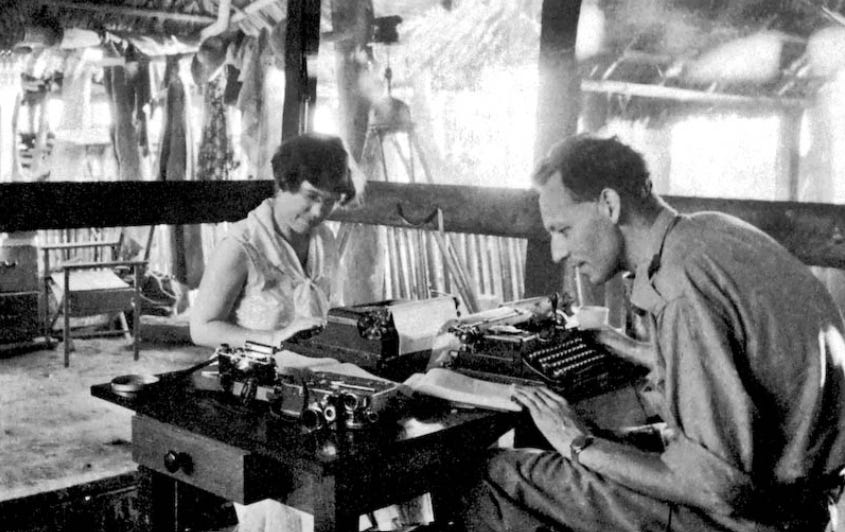
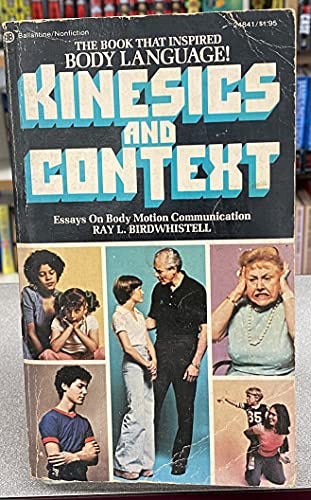
Mead, in particular, was highly critical of Ekman’s claim for the universality of emotions and facial expressions of those emotions. Mead attacked Ekman’s work on a methodological basis arguing that Ekman used posed photographs to elicit responses rather than observing natural, spontaneous expressions. She supported the work of her student Ray Birdwhistell, who studied nonverbal behavior as culturally constructed. Another criticism was that Ekman was attempting to apply Western psychological concepts to non-Western, isolated populations. Bateson, on the other hand, argued that looking for universals in emotion and expression was the wrong way to go. He argued that facial expressions should be seen as communicative symbols. And along with Mead and Birdwhistell, he believed that emotions were not physiological, but rather culturally learned. Mead, Bateson and Birdwhistell all argued for the importance of fieldwork and the primacy of the observers judgment and intuition – an approach that as a behavioral psychologist Ekman found lacking in scientific rigor and methodology.
What Gets Lost in Translation
Now in order to wrap this essay up, I believe that it is important to mention a few things that Ekman writes in his article, Universality of Emotional Expression? A Personal History of the Dispute. At the end of this long remembrance into his history with Mead, Bateson, and Birdwhistell (among other things), he ends up by noting Robert Levy’s work in Tahiti, and comments that “...even though expressions are universal, culture determines whether the person even knows that the feelings are related to the event.” He goes on to “Our evolution gives us these universal expressions, which tell others some important information about us, but exactly what an expression tells us is not the same in every culture.” So my reading on this, and I may be mistaken, is that these universal expressions – that is, the curve of the mouth for example may be the same in every culture, and the expression may be labeled as the emotion “sadness” but the meaning and the communication is not the same in every culture. So my question then is what is the point, going back to Lie to Me, of the equation reading facial expressions=reading truth, if the truth is different in every culture, or is at least not universal. In the next essay, I’ll explore what anthropologists have found when they look at the meaning of emotions rather than just their expression - and why that distinction matters.
Waiting on next installment...
Fascinating stuff! Keep it coming please